Most customer acquisition stories follow a familiar pattern. You see an ad, maybe you click it, you forget about it, and then one day, when it feels convenient enough, you download the app.
This one started very differently.
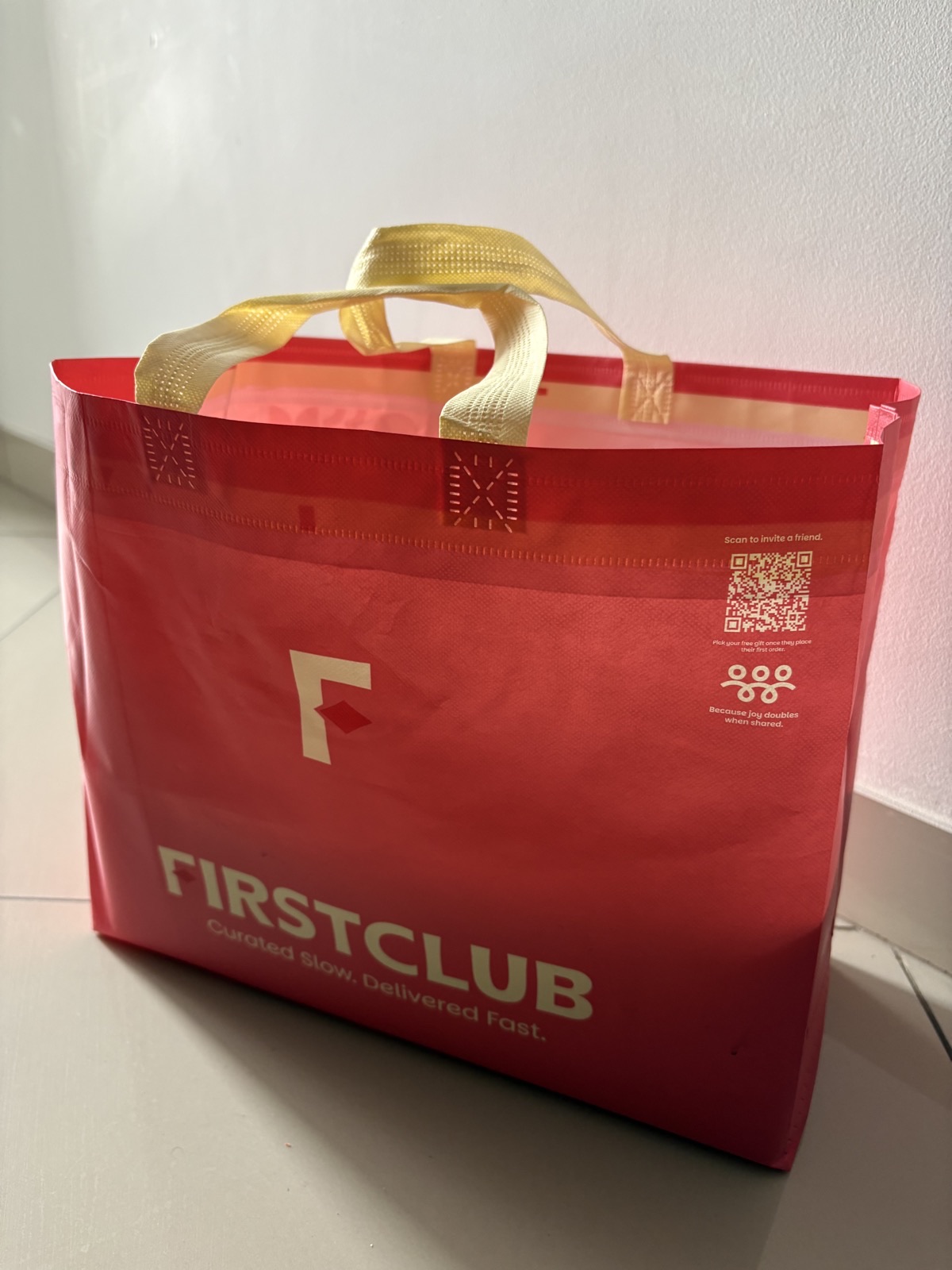
On a Friday morning, I opened my front door and noticed a bag placed neatly outside my apartment. It was sitting exactly where milk deliveries usually land. No call, no message, no notification on my phone. Just a clean, well-designed First Club bag waiting there.
My first reaction was that it must have been delivered to the wrong house. I stood there for a few seconds trying to make sense of it. That pause is what pulled me in. And that pause, I realised later, is where the marketing actually began.
This Didn’t Feel Like Random Sampling
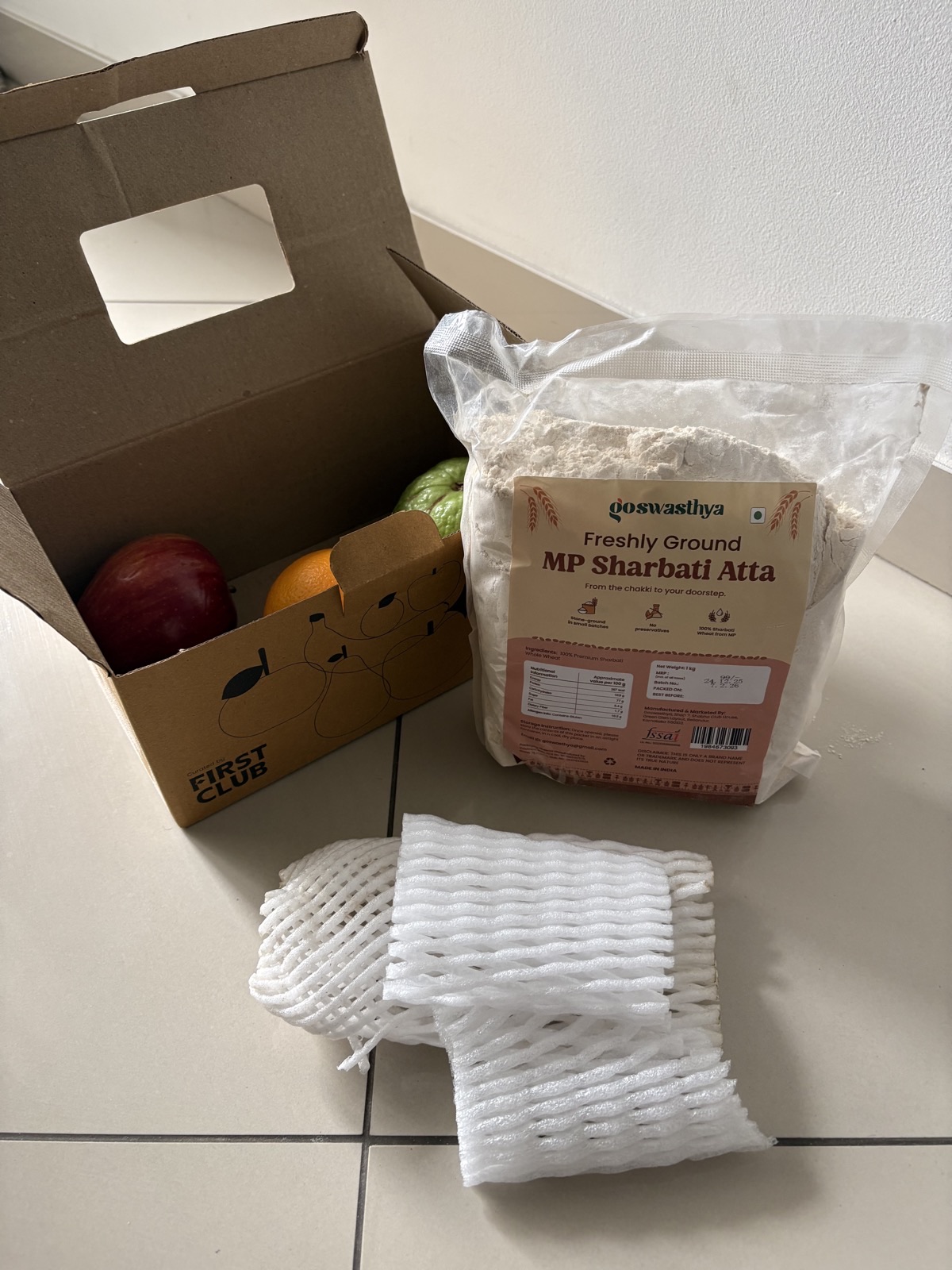
Inside the bag were a few grocery items.
An imported Thai guava, an imported apple, an orange, and freshly milled atta. Nothing felt excessive, and nothing felt like filler either. The quantities were small, but the choices felt intentional.
Along with the groceries were two printed inserts. One was a letter addressed specifically to my apartment complex. The other explained why these particular items had been chosen.
That combination immediately changed how I viewed the experience. This wasn’t free stuff being thrown around in the hope that something sticks. Someone had clearly thought through what the first impression needed to be.
The Letter Didn’t Try Too Hard
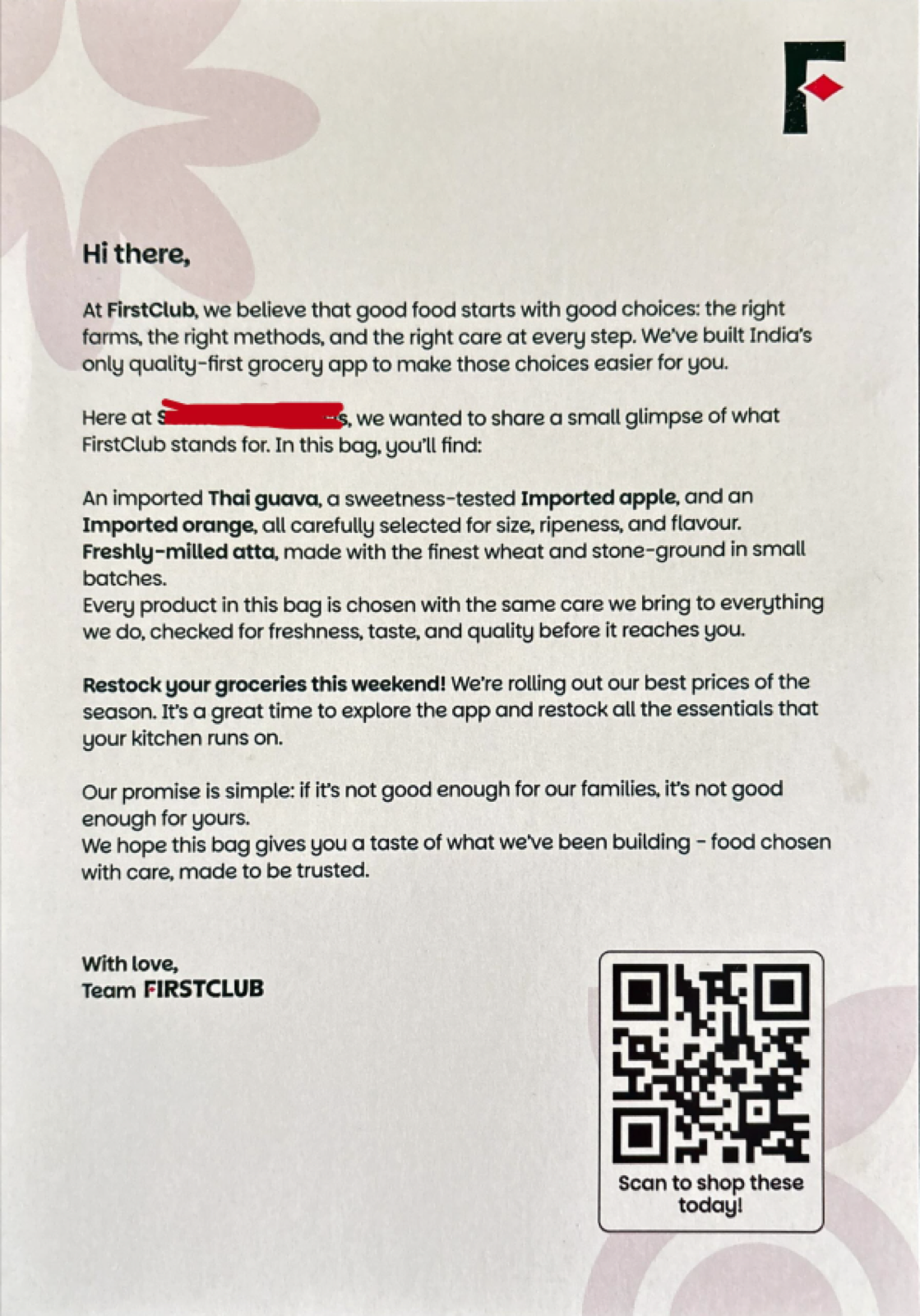
The letter itself was straightforward. It talked about how FirstClub thinks about food, about choosing the right farms and the right methods, and about being careful at every step. There was no dramatic language and no attempt to oversell.
What stood out was a small but important detail. The apartment name was printed on the letter.
That single line made a difference. It told me this wasn’t a city-wide blast or a generic drop. This was meant for people living here, in this building, at this stage of their life. That sense of intention is rare, especially in consumer marketing.
Where the Convincing Actually Happened
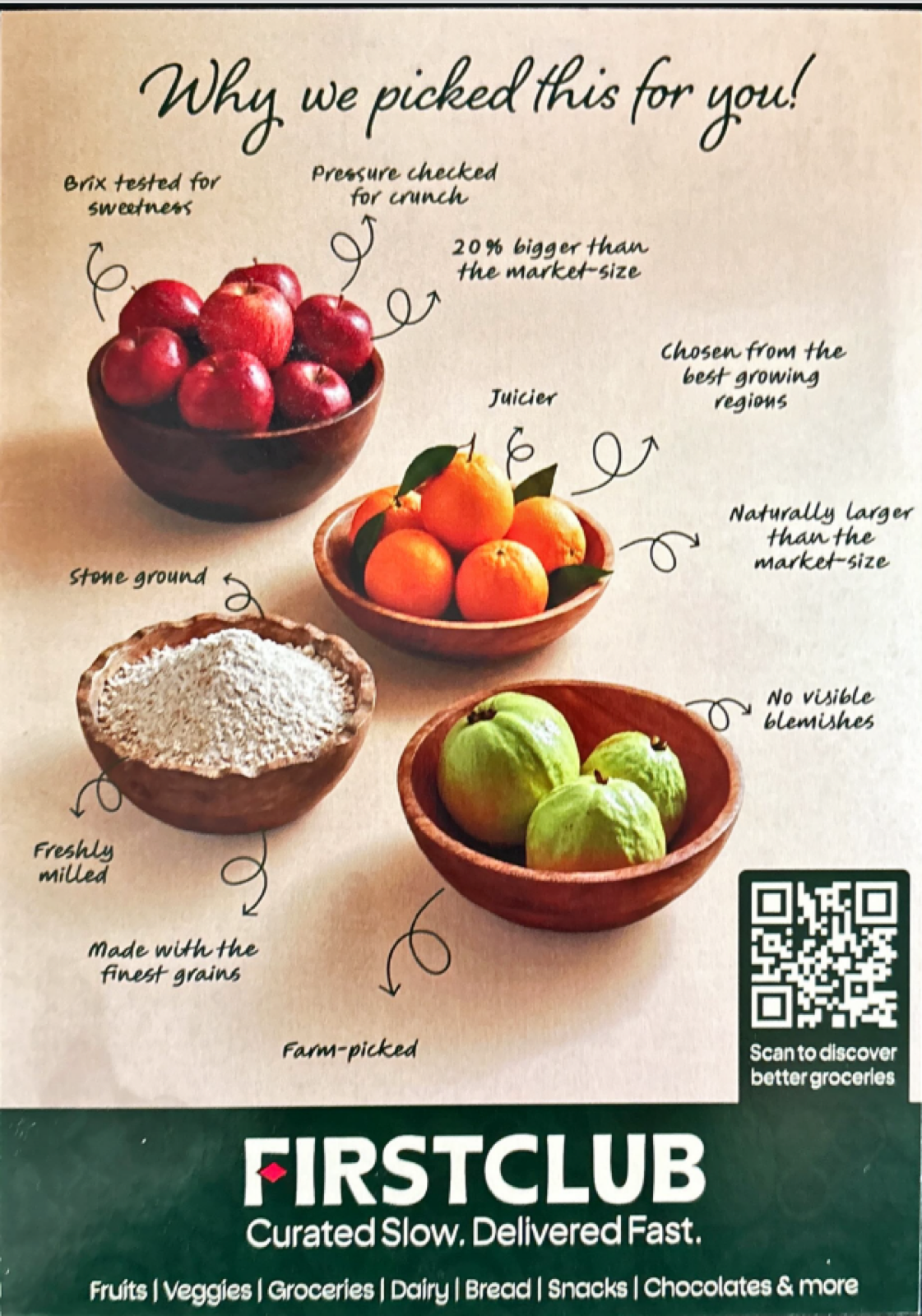
The second insert was titled “Why we picked this for you.” This card was the most interesting part of the entire experience.
Instead of describing the products with adjectives, it described the checks behind them. Sweetness is measured using Brix levels. Pressure checks for crunch. Sourcing regions. Stone-ground atta milled in small batches.
It didn’t feel like copywriting. It felt like someone explaining how decisions are made inside the company.
That distinction matters. Many brands ask you to trust them. Fewer take the time to show how trust is earned.
This Was Direct Mail, Just Done Thoughtfully
What FirstClub did is best described as direct mail, even though it looks nothing like what most people imagine when they hear that term. This was a doorstep drop combined with product sampling, personalization, and a simple QR code to continue the journey.
What made it work was context.
A premium apartment complex is already a filter. Income levels, lifestyle preferences, willingness to pay for convenience, and repeat purchase potential are all implied. In a setup like this, physical targeting can sometimes be more precise than digital targeting.
The Cost Question Misses the Bigger Picture
It’s easy to look at this campaign and assume it’s expensive. Between the products, packaging, printing, and logistics, the spend per apartment would likely be in the range of a thousand rupees or more.
Compared to digital leads that cost a fraction of that, this can look inefficient.
But grocery is not a one-time purchase category. If a household starts ordering regularly, the lifetime value adds up quickly. In that context, the upfront cost becomes less important than the quality of the customer being acquired.
Not all leads are equal. Some are just numbers on a dashboard. Others turn into habits.
The Most Interesting Part Was Unplanned
Within hours, apartment WhatsApp groups started discussing the delivery. Some people were confused. Some thought it was a mistake. Others were curious enough to try it out.
Kids noticed it while heading to school. Parents mentioned it casually while coordinating their day. None of this was orchestrated, but all of it worked in FirstClub’s favour.
Soon after, a WhatsApp group specifically for the apartment was created by the brand. By the time I noticed it, a significant number of residents had already joined.
That move quietly shifted this from acquisition to community building.
What This Made Me Rethink
We often talk about growth in terms of channels. Digital versus offline. Performance versus brand.
This experience was a reminder that the real question is fit. Some products benefit from being experienced physically. Some audiences respond better to care than to frequency. And some categories are built on trust long before they are built on scale.
Direct mail isn’t outdated. It’s just easy to misuse.
Finally,
What stayed with me was how restrained the entire experience was. No loud branding. No aggressive offers. No urgency manufactured out of thin air.
Just a quiet message that said, this is how we think about quality. If that matters to you, give us a try.
In a world where most brands are fighting for attention, this one waited patiently at the door.
And sometimes, that’s enough.